Whales and Northern Lights
With a marine biologist. Without screens.


An Arctic expedition for people who need to disappear for a while
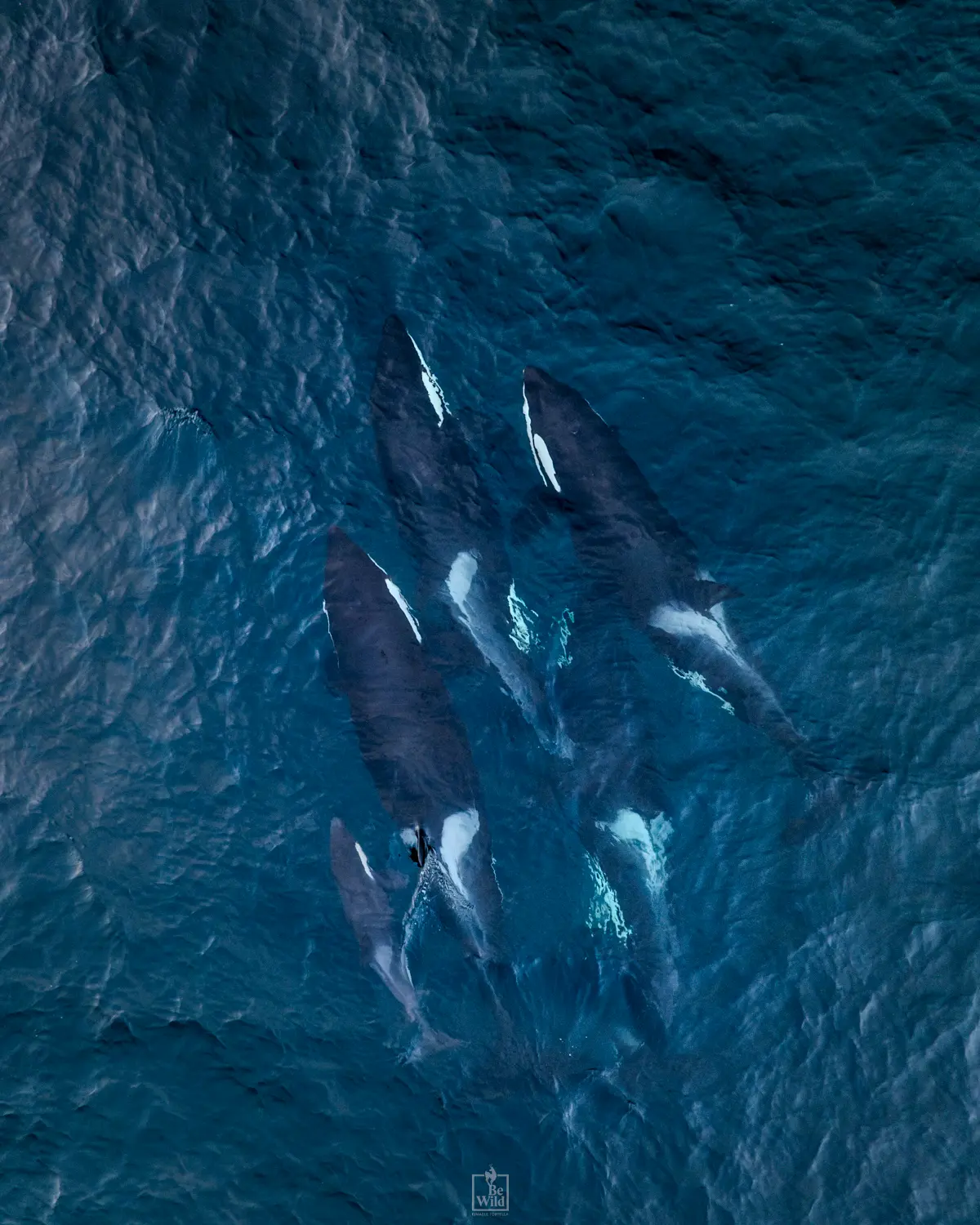
Six days and five nights aboard S/Y Ylva, sailing north from Tromsø through the winter fjords to Skjervøy, where orca and humpback whales come to feed. Most whale tours give you an hour out there. We stay for two days and a night, and we take it slowly: we wait, watch and listen. A hydrophone goes into the water, and whatever the whales are saying plays through the speakers in the warm mahogany lounge, for anyone who would rather listen indoors with a cup of tea.
Your phone goes in a box on the first evening — the guide keeps a camera instead. Outside, the polar night; inside, lamplight and no more than eight guests — couples, friends and people travelling alone — who won't feel like strangers for long.
You sail with a skipper who has spent his life on this coast and a marine biologist who works on it for a living. When a whale surfaces, someone on board can tell you what it is doing and why it is here. Nothing is a lecture.
Phone off. Attention on.
Take back your focus.
DISCONNECT
Your phone goes in a box on the first evening. You put it there yourself. What replaces the screen is a field journal, a chart and your own attention.
MOVE
Winter walks ashore, a swim in the sea if you want one, the hot tub on deck afterwards, and givind a hand with the ropes.
WONDER
Whales, kelp, plankton and the winter sky — told as stories and observations by someone who studies them professionally.
CONNECT
Eight guests, long meals, the sound of the whales in the lounge, and enough unscheduled time for a conversation to actually go somewhere.
Prices
Bunk cabin berth - NOK 40.000,-
Double cabin - NOK 44.000,-
20% deposit when booking, balance due 30 days before departure.-
Each day a new adventure
The week works its way north-east, from Tromsø out through the islands, into Lyngen, past Uløya and up towards the whale grounds off Skjervøy — and back. Every day has a job to do, but the order follows the weather, the waves and the whales. What you read here is the shape of the week, not a schedule.
We meet at the harbour in Tromsø, "the Paris of the North", in the afternoon. Cabins, then the skipper's safety briefing, which comes before anything else, and the first meal together at the table. Then the phones go into a box. You put yours there yourself.
You are handed a field journal, a pencil and a chart of the coast we are about to sail, and one question to answer in writing: what do you hope to hear when everything gets quiet? Nobody reads theirs out loud. Then we cast off, and the lights of the city fall away behind us.
We wake in the islands west of the city, most likely around Rebbenesøya, where the archipelago opens towards the sea. Breakfast, then the weather briefing at the table: what the sky is doing, what it means, and what the day looks like. Ashore for a few hours — animal tracks, the meeting of sea and snow, and the first Ten Minute Sit: ten minutes alone, no talking, no photographs. Afterwards, one question: what did you notice?
Then the long leg east, and the sailing becomes the day: watch-keeping, seabirds, learning to read a chart, hot drinks in the cockpit and the last streetlight disappearing astern. In the evening we come alongside at Havnnes on Uløya, a historic trading post and one of the few places north of Tromsø left standing at the end of the war. Ylva carries her own wood-fired hot tub on deck, and this is the night it gets lit, looking straight across the fjord at the Lyngen Alps. Hot water, cold air, and the whole fjord going dark around you.
The big sea day, and the reason the herring brought us this far north. We work the water off Skjervøy and the mouth of Kvænangen, where orca and humpback have gathered to feed in recent winters. We read the birds, the surface and the reports from other boats, and take turns on watch with binoculars.
If we find them, everything else stops — and the phones stay in the box. See the whale, don't film the whale.If the whales are not there - the sea is still full: seabirds diving on the same herring the whales came for, and current lines where the water itself tells you where the fish are. That is the moment the whole food web becomes visible.
That night we anchor close by, and the hydrophone goes down.
A second day in the whale grounds off Skjervøy, and today the science stops being a story and becomes the actual work. A hydrophone goes over the side and the sea comes up through a speaker on deck: the clicks and calls of orca hunting somewhere below the hull, the long low notes of a humpback, the crackle of the water itself — and, when a boat passes, exactly how loud we are in their world. The recordings are part of a research project on underwater noise, and you are on board while they are made.
There are observation sheets for anyone who wants one: how many animals, which species, what they were doing, where and when. Real numbers, collected properly. Being here a second day also means better odds of a proper encounter — and this is the day the camera comes out in earnest, so you go home with pictures of the animals you actually watched. Most people come for the sight of a whale. Almost nobody expects the sound.
We turn south and sail back in among the Lyngen Alps, mountains that rise more than a thousand metres straight out of the fjord. You did not think it was possible to sail through the Alps. Somewhere in Lyngen we go ashore: snowshoes or a walk in low terrain, chosen by the conditions and the avalanche assessment.
Not a performance — one to two unhurried hours with one question underneath: what does it feel like to be properly tired from moving through a landscape? Back on board for warm food and a swim in the sea first for anyone who wants one. In the evening, the Long Table: one long dinner, candles, no phones, one good question, something good in the glass. This is the evening guests describe when they get home.
The last stretch in to Tromsø, with time on deck and the four blue hours of the day doing what they do to snow and sea. Gentle movement, breakfast, and the last page of the journal, with one question before we sail: what do you want to take home that doesn't fit in your luggage?
Six days ago you sat down to dinner with seven others. This morning you are swapping numbers with them, arguing about who really saw the first blow, and making the kind of plans people make when a week has gone better than they expected. Then the phones come back — all at once, after the goodbyes rather than before them. Six days of messages arrive in ninety seconds. You go home with photographs, a notebook full of your own handwriting, salt in your jacket, and seven people who were there.
Meet the crew

Christian, crew
Sailor and host, Sweden

Manu, Skipper
Experienced arctic sailor, France

Sanne, lead guide
Marine biologist, Norway
Summary of Booking Terms
Please read and accept the full Terms & Conditions before confirming your booking.
Below is a short summary of the main points:
-
Travel to the vessel
You are responsible for arranging and paying for your own travel to and from the embarkation port. -
Deposit and payment
A non-refundable deposit is due at the time of booking.
The remaining balance must be paid 60 days before departure. -
Minimum number of guests
Each tour requires a minimum number of participants.
If this number is not reached, the tour may be cancelled, and you will receive a full refund or rebooking offer. -
Insurance requirement
You must have valid travel insurance covering cancellation, medical treatment, and evacuation from ports within the tour area. -
Safety and behavior
The Captain is the ultimate authority on board.
Guests must follow all crew instructions and act responsibly.
The use of illegal drugs or bringing your own alcohol is strictly prohibited and may result in disembarkation without refund. -
Changes of itinerary
Itineraries may change due to weather or operational reasons.
We will always strive to provide the best possible experience in a safe manner.